How to Clear the Undergrowth: A Practical Guide to the Right Methods
NEWS · 08 June 2026
Do you have a woodland area to manage and don't know where to start? Or have you found yourself with farmland overrun by brambles, weeds and uncontrolled vegetation? Clearing the undergrowth is one of those jobs that tends to be put off, but if neglected for too long, it becomes much more difficult and expensive to tackle.
Today, maintenance is also governed by a specific legal obligation: to prevent fires and protect public safety, landowners are required to clear their land of weeds and dry vegetation, often by specific deadlines set by local authorities at the beginning of summer, with heavy administrative penalties for non-compliance. But where should you start? And, above all, how can you clear the undergrowth efficiently and safely while fully complying with current forestry regulations and permit requirements?
In this comprehensive guide, we will look step by step at how to clear woodland, which rules you need to follow to avoid fines, and which professional tools can turn a demanding job into a fast and productive operation.
Why Is It Important to Clear the Undergrowth?
Clearing the undergrowth is not just a matter of appearance. There are practical and environmental reasons behind this type of work.
Wildfire Prevention
Dry vegetation, tall grass, fallen branches and accumulated leaves are the main fuel for summer wildfires. Keeping the undergrowth clear significantly reduces the risk of flames spreading.Plant Health
A woodland or uncultivated field can be difficult to access, inspect and work on. After thorough clearing, the land becomes much easier to manage for all subsequent operations.
Access and Usability of the Land
A woodland or uncultivated field can be difficult to access, inspect and work on. After thorough clearing, the land becomes much easier to manage for all subsequent operations.
Accessibility and Value of the Property
Well-maintained land is worth more, both economically and in terms of agricultural or forestry productivity. A clean woodland is walkable, safer and ready for harvesting fruit, collecting firewood or carrying out routine maintenance.
When to Clear the Undergrowth: Timing Makes the Difference
Late spring (April–May): this is the ideal time for a first intervention. Vegetation is growing vigorously and is easier to cut, while the ground is still accessible before invasive plants become deeply established. However, be aware that in some Italian regions, forestry work is prohibited during the fire-risk season (June–September), so check local regulations before starting.
Autumn (October–November): perfect for a second clearing cycle, especially after harvesting. Vegetation slows down, branches are easier to see and working conditions are cooler.
Winter: suitable for heavier work, such as removing diseased trees and stumps, because vegetation is dormant and there is less disturbance to wildlife.
A practical rule: don't wait until the undergrowth has become completely overgrown. Carrying out regular maintenance, at least once or twice a year, requires far less effort than a major recovery operation every three or four years.
Operating Steps: How to Clear the Undergrowth Step by Step
Clearing a woodland area is not a random task; it requires a systematic approach to optimise working time and avoid operator fatigue. Here is the sequence typically used by professional landscaping and grounds-maintenance teams.
1. Site Inspection and Planning
Not every shrub needs to be removed. Before starting, identify protected species or plants that are useful to the local ecosystem and mark young trees that should be preserved. Assess the slope of the terrain and the density of the vegetation to determine which machinery should be used.
2. Cutting Brambles, Tall Grass and Invasive Shrubs
The real obstacle in the undergrowth is the dense network of brambles and weeds that prevents access. This is where the first phase of heavy work takes place. To work quickly, there are two options depending on the terrain:
- For flat areas or precision finishing: a professional cordless battery-powered brush cutter is the ideal choice. It allows you to move easily between trees without the bulk, noise and emissions of older petrol engines, while providing the power needed to cut woody stems and layered vegetation.
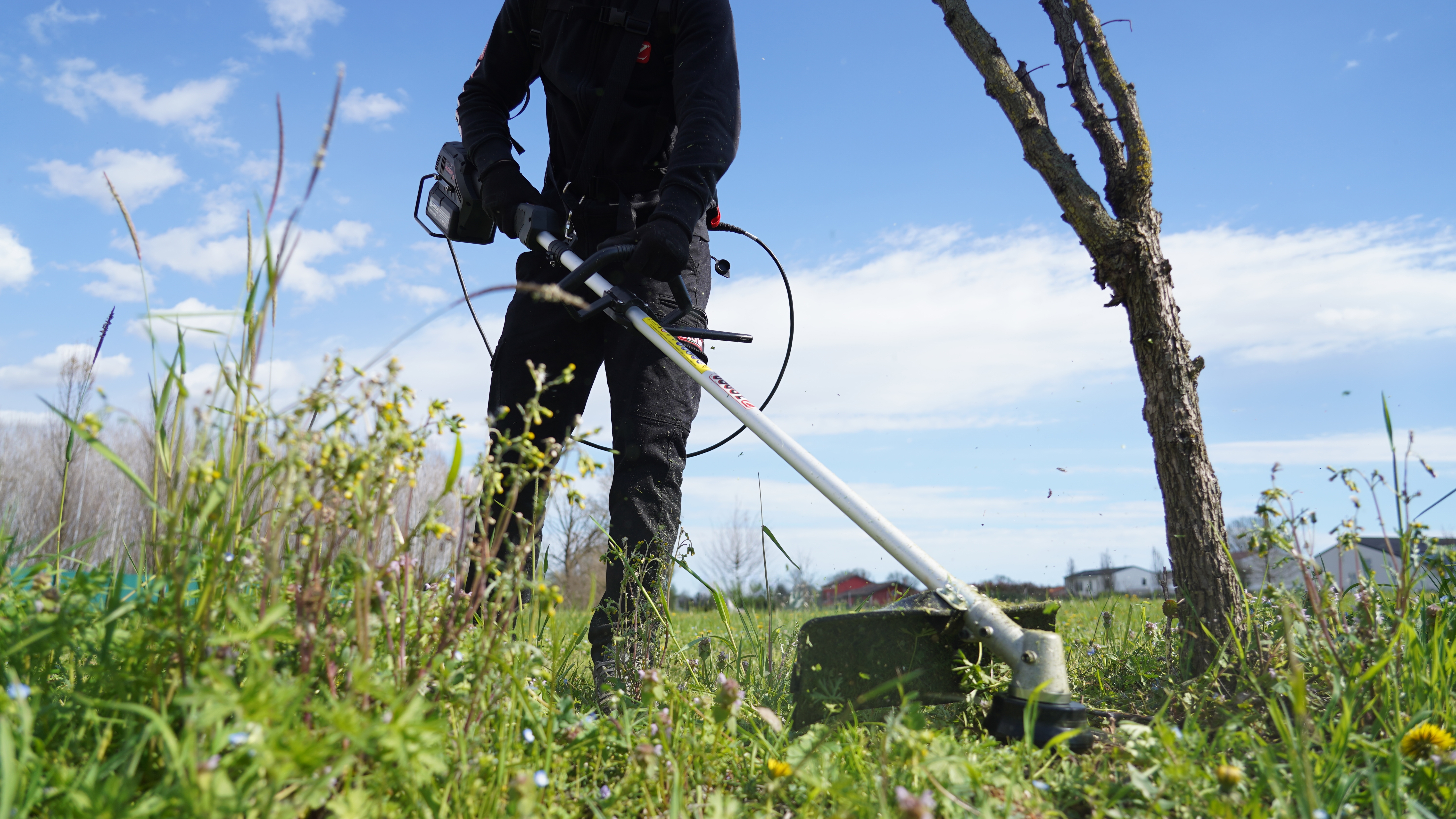
For undergrowth, the ideal configuration includes:
- Reinforced line for tall grass and light weeds
- Three-tooth blade for brambles, shrubs and denser, deeply rooted vegetation
- For extreme slopes and large areas: when the terrain becomes rough, steep or too densely covered with tall brambles, the ultimate solution is a remote-controlled flail mower.
These tracked machines can tackle very steep slopes where a person or conventional tractor could never operate safely. Thanks to remote control, the operator can manage the work from a safe position, eliminating the risks of slipping or overturning while shredding shrubs and reeds in a single pass.
If there are dead trees, diseased plants or dangerous branches, use a battery chainsaw before doing anything else: a tree falling while you are working with a brush cutter is an unnecessary risk.
3. Pruning Low Branches and Removing Deadwood
Once the ground has been cleared of brambles, it is time to cut the lower branches of trees (up to 2 metres high), low weeds, exposed bramble roots, and dry or broken branches. This improves light penetration and removes additional fuel that could contribute to potential fires.
You can use battery-powered pruning shears or manual loppers. Hand tools remain extremely useful in areas that machines cannot reach or where the vegetation is too sparse to justify using mechanical equipment.
4. Managing and Disposing of Plant Residues
The smartest and most environmentally friendly solution is to shred the material directly on site.
Depending on the type of waste accumulated, you can use bio-shredders to drastically reduce the volume of thicker, woody branches, turning them into wood chips.
This material can be reused as mulch, helping to prevent the growth of new weeds, or left to decompose on the ground as a natural fertiliser.
For more heterogeneous waste, a garden wood chipper is ideal. This machine finely shreds not only small branches, but also leaves, moist residues, brambles and mixed organic material.
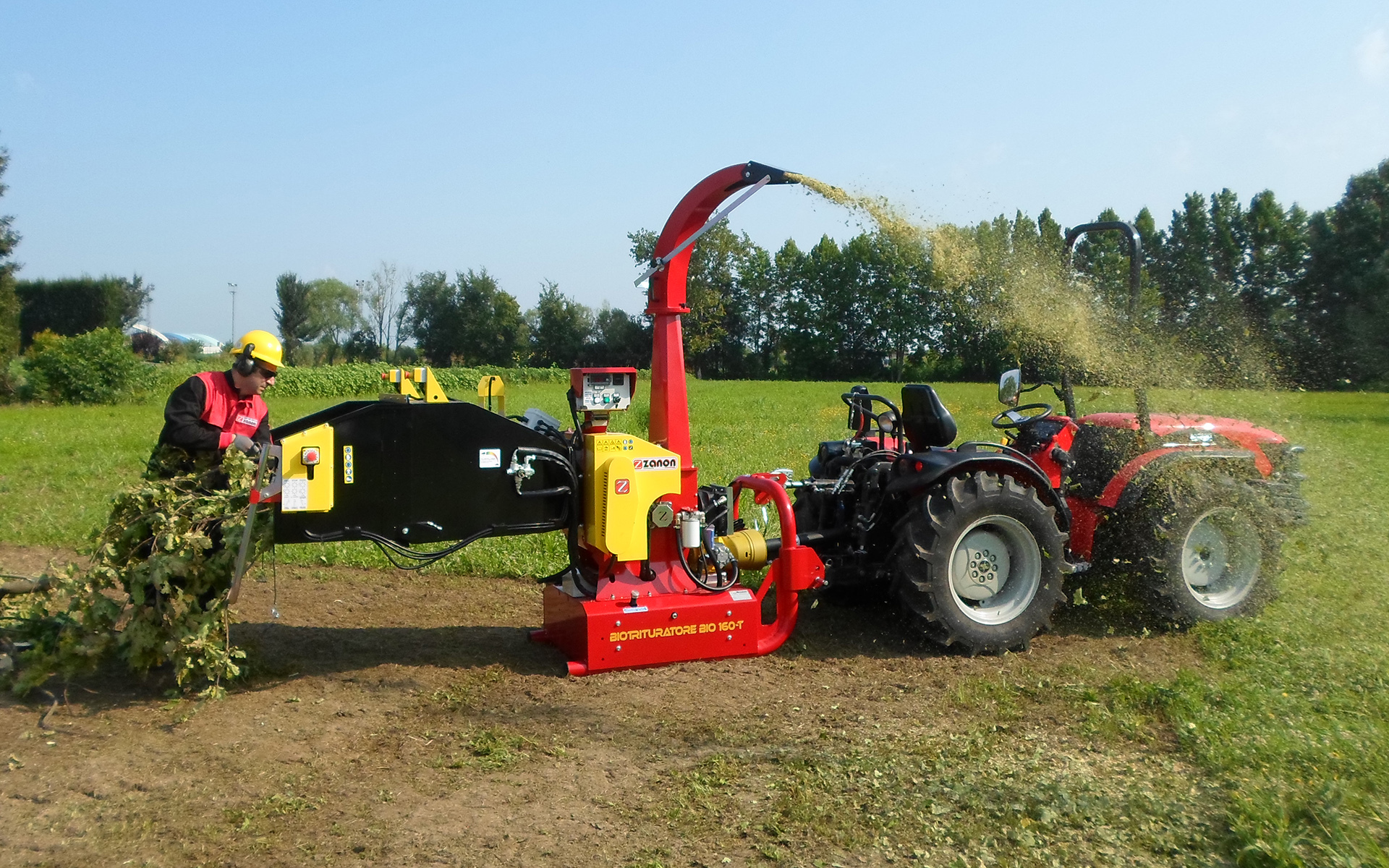
Its shredding action dramatically accelerates decomposition, transforming piles of plant waste into material that is perfect for commercial or domestic composting.
If you are unsure which equipment is best suited to your needs and want to understand the difference between a garden shredder and a wood chipper, you can read this in-depth article to discover all the solutions for composting and green-waste management.
Common Mistakes to Avoid When Clearing Woodland
Anyone approaching this type of work for the first time tends to make a few recurring mistakes. Here they are, so you can avoid them.
1. Starting without a plan: rushing into the area without a strategy leads to disorganised work, repeatedly covering the same areas and wasting energy. It is better to inspect the site first and divide the area into sections.
2. Using the wrong tool for the type of vegetation: brush-cutter line is not enough for deeply rooted brambles. The wrong blade wears out quickly and does not cut efficiently. Always choose the right accessory for the job.
3. Neglecting disposal: cutting vegetation and leaving everything on site is not cleaning—it is simply moving the problem. Plan in advance how you will manage the residues.
4. Working during the hottest hours of summer: on summer days, heat and fatigue increase the risk of accidents. Work during the early morning and take regular breaks.
5. Failing to maintain equipment: worn blades, flat batteries and clogged filters all reduce performance and shorten the life of your equipment. Before each season, inspect and fully check your tools.
Regulations and Permits: What Does the Law Say?
When considering how to clear the undergrowth, you should never overlook the legal aspect. In Italy, woodland management is regulated at regional and forestry level (PMPF – Maximum Prescriptions and Forestry Police Regulations), while specific obligations may also apply at local level.
Here are the key rules and requirements that should always be checked before starting your machinery:
1. Clearing obligations and municipal ordinances: there is a specific legal obligation for owners of uncultivated or woodland properties aimed at protecting public safety and reducing fire risks. Municipalities often issue specific ordinances shortly before the hot season, usually with deadlines at the beginning of summer. These ordinances may require the removal of weeds and dry vegetation and the cutting of branches overhanging roads or neighbouring properties. Failure to comply can result in substantial administrative fines.
2. Closed periods and forestry permits: in addition to municipal deadlines for high-risk land, ordinary forestry and woodland-maintenance activities follow regional calendars. In many cases, clearing and cutting vegetation are prohibited during the bird-nesting season (spring and summer), making autumn and winter the ideal working window. For structural work in the undergrowth or the removal of certain quantities of woody material, specific forestry authorisation may need to be obtained in advance.
3. Restrictions on tree felling: clearing the undergrowth means removing invasive vegetation and dead material and cleaning around tree trunks. Felling living mature trees goes beyond simple clearing and almost always requires an authorisation procedure or formal notification to the relevant forestry authorities.
4. Managing fires: burning weeds and vegetation on site is subject to strict seasonal restrictions and can result in severe penalties, as well as criminal consequences in the event of an accidental fire. This is why using a wood chipper or garden shredder is always the safest, most environmentally friendly and legally sound solution.
Do you need to bring your land into compliance with municipal ordinances, or are you looking for machinery capable of speeding up work on more complex forestry sites? Rely on the quality and experience of a company that has been designing cutting-edge agricultural solutions for over 50 years.
Our experts are ready to help you choose the brush cutter, garden shredder or remote-controlled system best suited to your operational needs.