Grapevine Esca Disease: Complete Guide to Recognizing and Treating It
NEWS · 09 April 2026
Grapevine esca disease is one of the most feared diseases in viticulture. It affects vineyards throughout Italy and can seriously compromise the productivity and longevity of grapevines.
If you have noticed leaves with unusual spots, shoots that suddenly dry out, or declining yields, you may be seeing the first symptoms of esca disease.
In this complete guide, we will look at:
- how to recognize it;
- how it spreads;
- what remedies are available for esca disease;
- how to prevent it through good agronomic practices.
What is grapevine esca disease and why is it so concerning?
Esca disease is a degenerative condition that affects the plant's conducting vessels. The fungi involved, such as Phaeomoniella chlamydospora and Phaeoacremonium aleophilum, degrade the wood, reducing it to a spongy, crumbly mass known as “esca”.
These pathogens degrade the internal wood, compromising:
- sap transport;
- grapevine vitality;
- grape production.
Over time, the plant may completely dry out. Although it is typically associated with mature vineyards, it can also affect young vineyards.
The main problem? The plant is often infected for years before showing the first external signs. This is why prevention and the use of suitable equipment are your best weapons.
How does esca disease spread?
Transmission occurs mainly through pruning wounds. Fungal spores, carried by wind or rain, settle on fresh cuts and penetrate the vascular system.
This is where the quality of your work comes into play: ragged cuts or dirty tools facilitate the entry of pathogens. Using professional electronic pruning shears that provide a clean, precise cut is the first step toward reducing the risk of infection.
Symptoms of esca disease: how to recognize it in the vineyard
Recognizing the symptoms of esca disease early is essential to limit damage and save plants. The disease can appear in two forms:
Leaf tiger-striping: chronic symptoms
This is the most common form. You will notice yellow or reddish veins on the leaves, depending on the grape variety, leaving only the central area around the main veins green. The most obvious signs are:
- chlorotic spots between the veins;
- marginal drying;
- the characteristic “tiger-striped” effect.
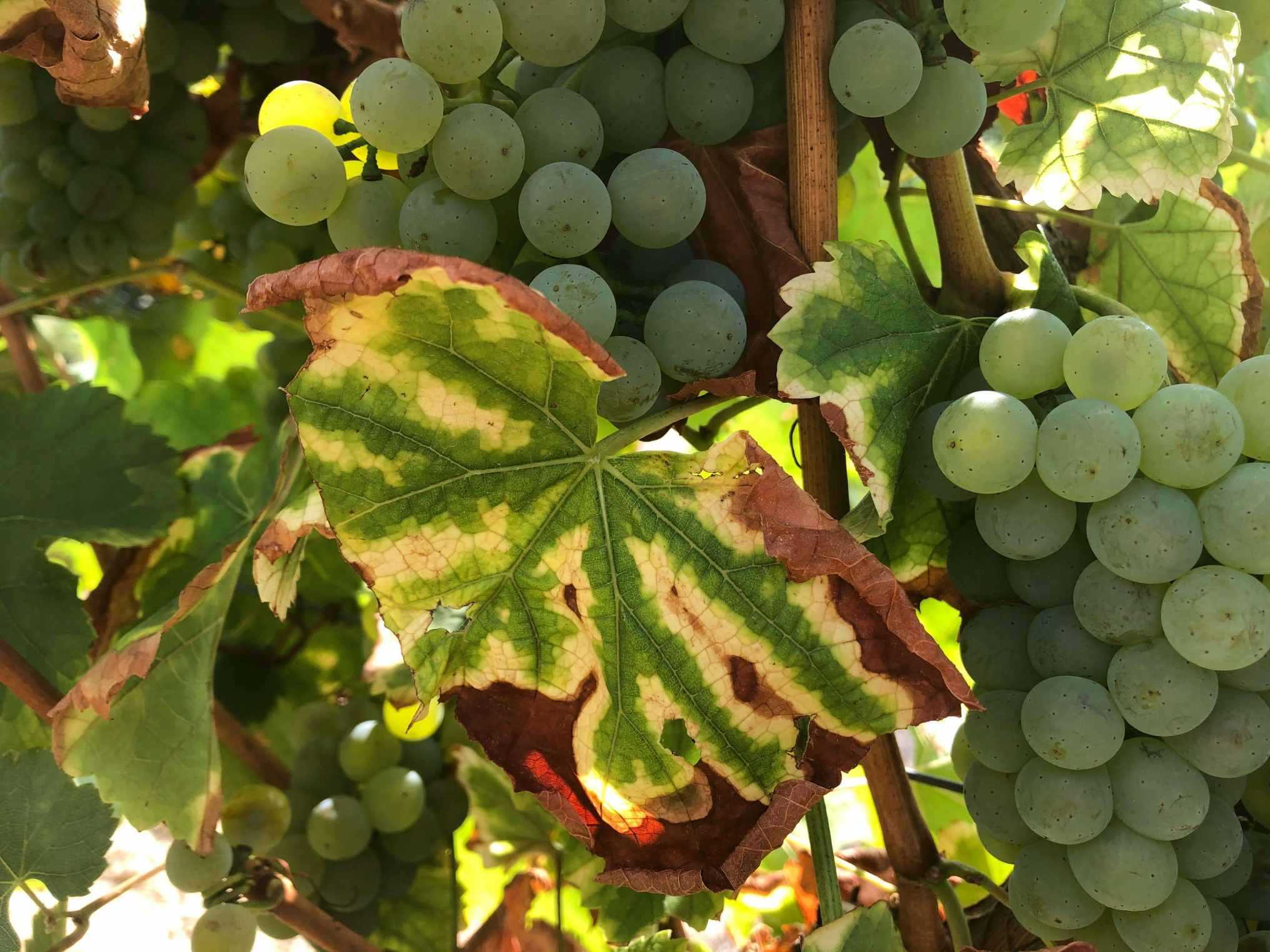
This “tiger-striped” appearance is unmistakable. Over time, the affected areas dry out, but the leaf often remains attached to the shoot.
Apoplexy: acute symptoms
In summer, especially after sudden rainfall followed by intense heat, the plant can suffer a total collapse within a few days. The leaves suddenly turn yellow and wilt: this is a sign that the vascular system is completely obstructed.
Symptoms on shoots and wood
When esca disease affects the woody parts of the grapevine, the signs can become more obvious and often more concerning. Shoots may suddenly dry out, even during the growing season, while the plant as a whole shows slower and less vigorous growth than normal.
However, the damage is not only external. True areas of necrosis develop inside the wood, compromising the proper flow of sap and the functionality of the plant.
A very clear sign can be observed by cutting the trunk or a branch: in these cases, the wood often appears dark, degraded and spongy. It is also not uncommon to find rotten areas typical of so-called wood decay, indicating an advanced stage of the disease.
Remedies for esca disease: from prevention to treatment
Unfortunately, there is still no “magic cure” capable of eliminating the fungus once it has established itself inside the trunk. Remedies for esca disease therefore focus on agronomic management.
1. Carry out regular pruning with disinfected professional tools
In addition to choosing the right period—avoiding excessively humid days—it is essential to carry out green pruning to manage plant vigor and reduce large winter cuts, which are the preferred entry points for fungi.
An aspect that is often underestimated but crucial is cleaning and disinfecting pruning tools. It is extremely important to clean the tools after every use because they are one of the main vehicles for spreading bacteria and fungi from one plant to another. If you need to remove infected parts, use ergonomic battery-powered pruners to work quickly and precisely, always disinfecting the blades between plants.
2. Dendrosurgery: the most effective technique
One of the most innovative techniques is grapevine dendrosurgery. It involves mechanically removing decayed wood (the esca) from inside the trunk, leaving only healthy wood. It is a surgical intervention that can save valuable plants and delay their removal.
3. Removing infected plants
When esca disease reaches an advanced stage and the plant is too severely compromised, it is important to make a clear assessment. In these cases, trying to save it often produces no concrete results and may actually pose a risk to the rest of the vineyard.
The most effective solution is to uproot the diseased plant, preventing the problem from spreading to healthy vines. Although it may seem like a drastic choice, acting promptly helps protect the overall balance of the vineyard and limit long-term damage.
4. Min-till and soil management: supporting grapevine health
A healthy vineyard starts with the roots. Water and nutritional stress make grapevines more susceptible to fungal attacks. This is where the concept of Min-Till (Minimum Tillage) comes into play.
Reducing the intensity of soil cultivation helps preserve soil structure and microbial biodiversity, which can naturally help counteract pathogens. Using modern inter-row cultivators allows weeds to be managed without excessively stressing the grapevine's root system. In addition, adequate aeration of the vineyard promotes gas exchange, making the plant more resilient.
Final considerations
Grapevine esca disease is undoubtedly a complex condition, but with the right strategies it can be contained.
Prevention is essential: carefully monitoring early symptoms, using tools that are always clean and disinfected, and acting quickly on the most severely affected plants can make a significant difference.
Don't let fungi compromise your vineyard. Choose precision, choose prevention, choose Zanon technology.